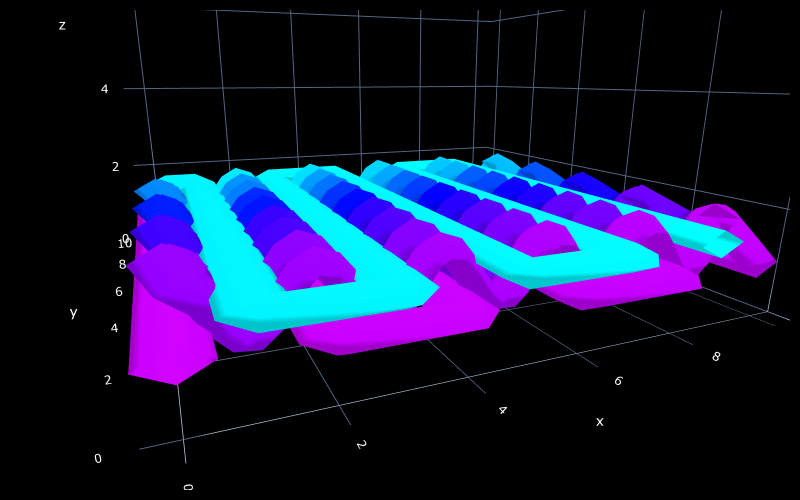
One of the biggest limitations in FDM 3D printing is anisotropy—parts are significantly weaker in the Z-direction than in the X–Y plane.
In many cases, Z-strength is only ~60% of in-plane strength. This is a direct result of the layer-by-layer process: each layer cools before the next is deposited, leading to relatively weak interlayer bonding.
The Problem with Planar Layers
Even within a single layer, voids can form between extrusion lines, especially when material viscosity is high or extrusion parameters are suboptimal.
These voids act as stress concentrators, making it easier for cracks to initiate and propagate. As a result, most printed parts fail along relatively flat, planar paths.
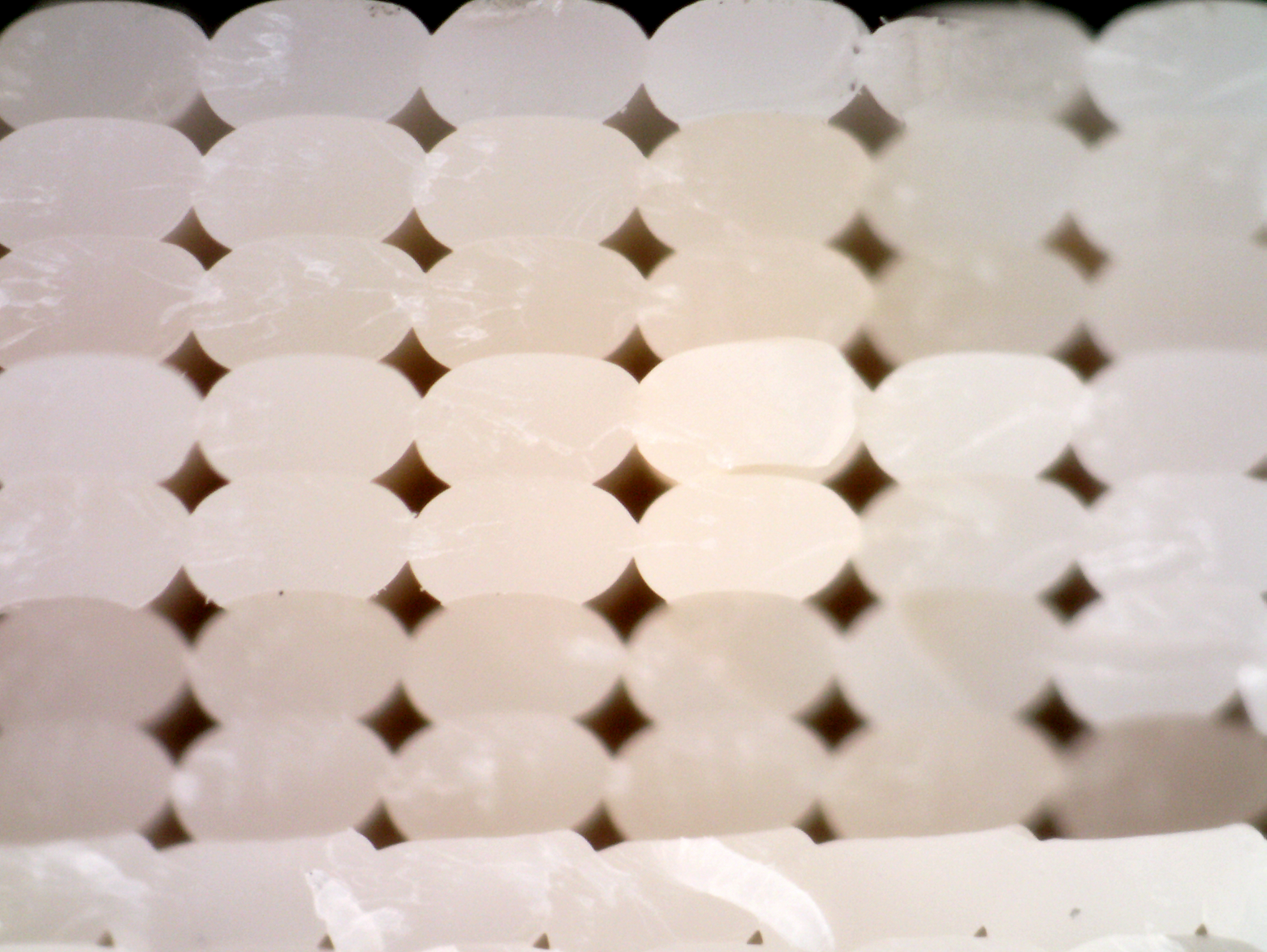
What if we could disrupt those planar failure paths altogether?
Non-Planar Printing as an Opportunity
Non-planar 3D printing allows simultaneous motion in X, Y, and Z, removing the constraint of flat layers and enabling new toolpath strategies.
Building on this idea, I’ve been exploring a new concept: woven infill.
Woven Infill
Instead of depositing flat, parallel lines, woven infill introduces controlled Z-variation into the toolpath, creating an interlocking structure across layers.
- Z-offsets are approximately half a layer height
- Spacing between paths is ~2× extrusion width
Why Add Gaps?
At first glance, this approach seems counterintuitive—why introduce gaps when infill is supposed to eliminate them?
The key idea is intentional underfilling followed by compression. Adjacent paths overlap in 3D space, forcing material into void regions and increasing interlocking between layers.
Hypothesis
- Disrupts planar crack propagation
- Increases interlayer bonding area
- Reduces effective void size
This is an early-stage concept, but it opens up interesting directions for experimentation and optimization.